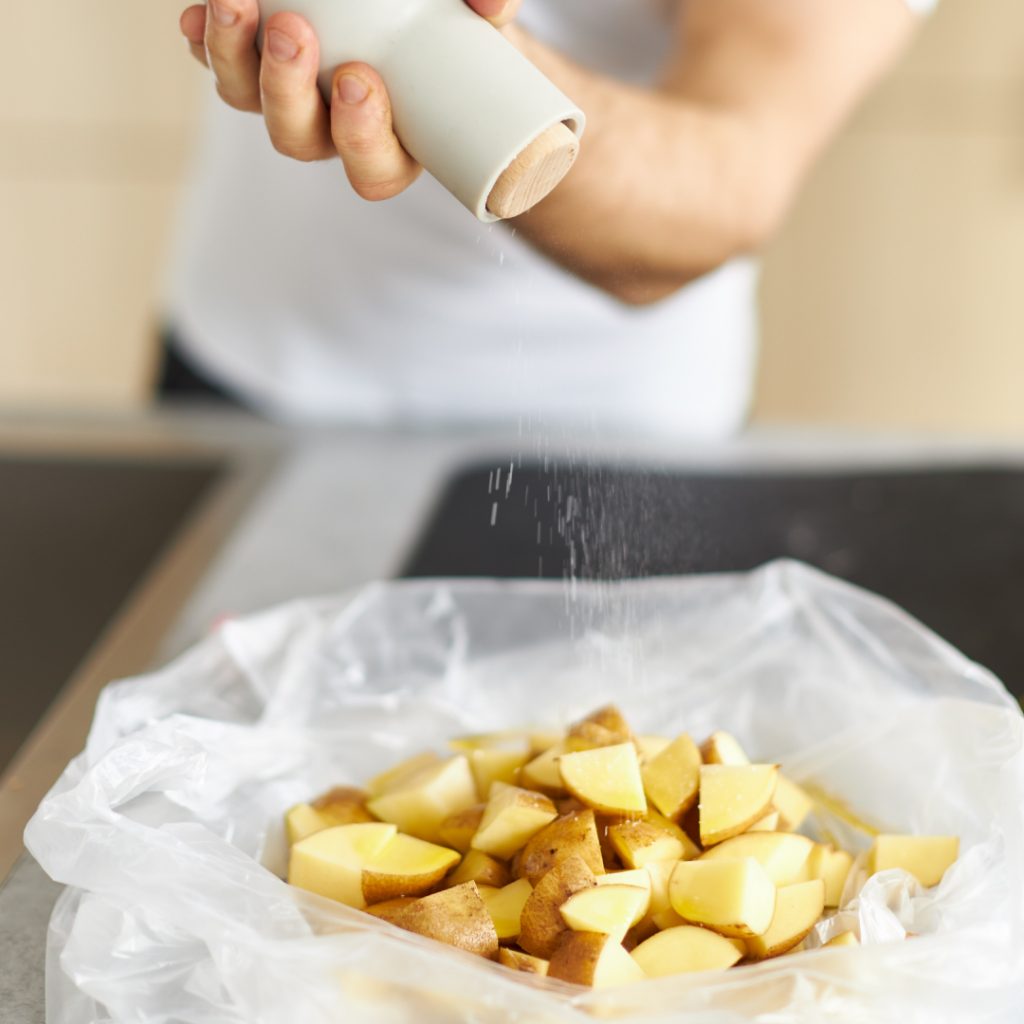

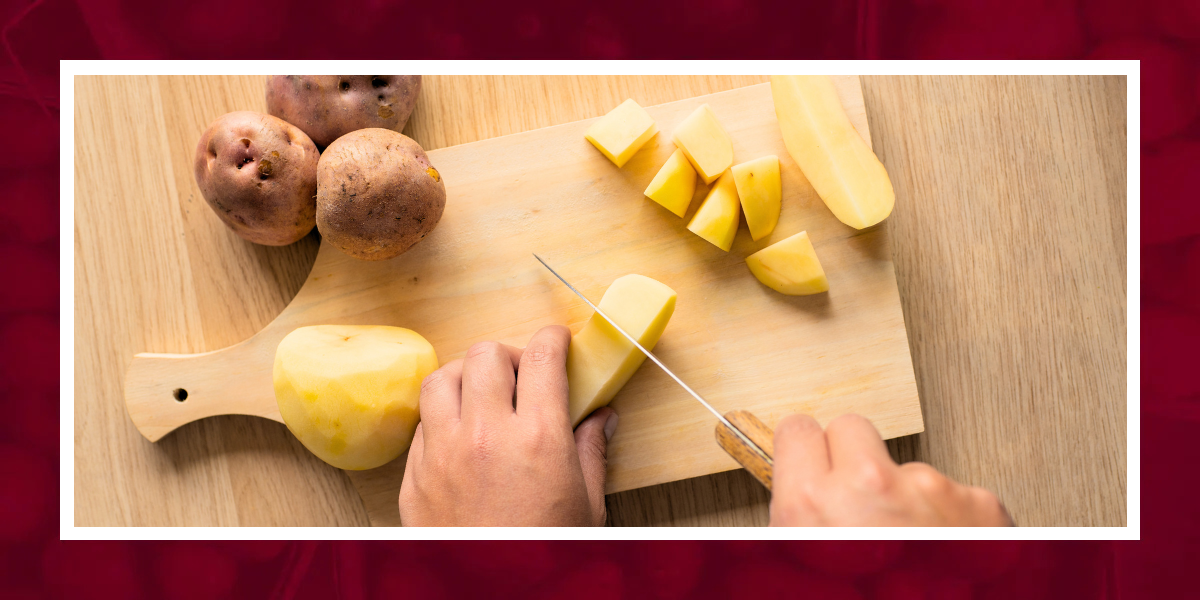
Knowing how to keep cut potatoes from turning brown can make holiday cooking, weekly meal prep, and large-batch foodservice preparation much easier. Plan to use the potatoes within 24 hours for the best texture, flavor, and cooking performance, and follow the below tips for additional protection against discoloration.
When a potato is peeled or cut, its protective structure is broken and the inside is exposed to oxygen. Enzymes in the potato, including polyphenol oxidase, then react with naturally occurring compounds in the flesh. This process creates darker pigments on the exposed surface.
This is known as enzymatic browning. It is similar to the reaction that occurs after cutting an apple or avocado.
The potato may first develop pink, tan, gray, or brown areas. A modest color change can be the result of oxidation rather than spoilage, but discoloration should never override other warning signs. Discard cut potatoes that have developed mold, slime, an unpleasant odor, or questionable temperature history.
Use these steps when preparing potatoes several hours or one day ahead.
Rinse whole potatoes under cool running water before peeling or cutting them. Do not use soap, bleach, or household cleaners on fresh produce.
Trim away bruised or damaged portions before continuing.
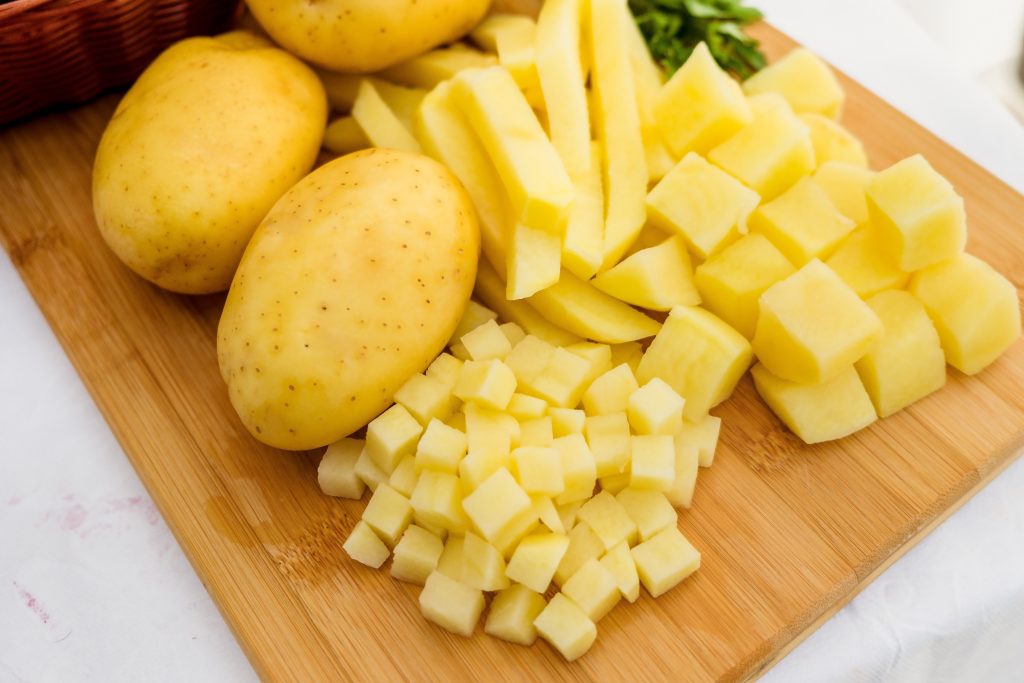
Peel the potatoes if the recipe requires it, then cut them into evenly sized pieces. Similar dimensions help the potatoes cook at the same rate later.
Choose the shape based on the final dish:
For help matching texture to the recipe, see Masser’s guide to choosing the right potato for each cooking method.
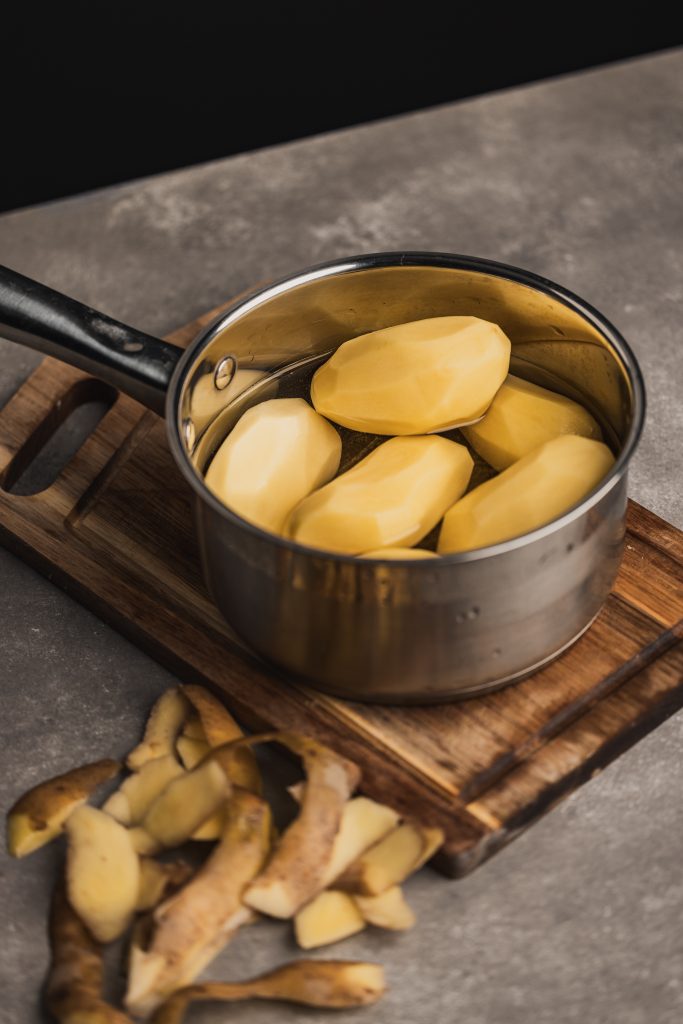
Place each piece into cold water as soon as it is cut. Make sure the potatoes remain fully submerged because any surface exposed to air can still darken.
Cold water creates a barrier between the potato flesh and oxygen. Utah State University Extension recommends covering raw cut potatoes with cold water to prevent them from turning gray.
Use enough water to cover the pieces comfortably, but avoid an unnecessarily oversized container. Large containers can take up valuable refrigerator space and may be difficult to move safely.
Plain cold water is sufficient for many short preparation periods. For additional protection, add a little lemon juice or vinegar.
Oregon State University Extension recommends placing cut potatoes in cold water with a splash of vinegar or lemon juice. The mild acidity helps slow the browning reaction.
For a measured foodservice approach, the Idaho Potato Commission recommends approximately one tablespoon of concentrated lemon juice or vinegar per gallon of water in its storage and preparation guide.
Avoid adding excessive acid. Too much may affect the potatoes’ flavor.
Place a lid on the container or cover it securely, then move it into the refrigerator. Keep the refrigerator at 40°F or below.
Whole potatoes are generally stored in a cool, dark, ventilated location rather than the refrigerator. Once potatoes have been peeled or cut, however, they require refrigeration.
USDA guidance says cut or peeled produce should be kept in a covered refrigerated container and should not remain at room temperature for more than two hours. Review the agency’s cut-produce storage guidance for additional food-safety information.
When it is time to cook, drain the potatoes thoroughly.
For boiling or mashing, a small amount of surface moisture is usually not a problem. For roasting, frying, or air frying, dry the potatoes well with clean kitchen towels or paper towels. Excess water can create steam and make it harder to develop crisp, browned edges.
Do not pour wet potatoes directly into hot oil. Water and hot oil can splatter dangerously.
For the best quality, use refrigerated cut potatoes within 24 hours.
Utah State University Extension says covered potatoes can last until the next day, although soaking can reduce some water-soluble nutrients. The Idaho Potato Commission also recommends a maximum holding period of approximately 24 hours.
A longer soak may gradually affect texture and cooking performance. Potatoes can absorb water while some surface starch moves into the soaking liquid. The exact effect depends on the potato variety, cut size, water temperature, and final cooking method.
Label foodservice containers with the preparation date and time. A clear label prevents uncertainty about how long the potatoes have been held and supports first-in, first-out rotation.
Soaking can be helpful or inconvenient depending on what you are cooking.
| Dish | Effect of soaking | Preparation note |
|---|---|---|
| Mashed potatoes | Helps prevent discoloration during advance preparation | Drain well before boiling |
| Roasted potatoes | Can remove some surface starch | Dry thoroughly before adding oil |
| French fries | Often fits naturally into fry preparation | Keep cold, then drain and dry completely |
| Potato salad | Makes advance cutting more convenient | Use uniform pieces for even boiling |
| Soup or stew | Usually has little practical drawback | Drain before adding to the recipe |
| Hash browns or potato cakes | May remove starch that helps pieces bind | Prepare closer to cooking when practical |
| Gratin or scalloped potatoes | Prevents exposed slices from darkening | Drain and dry so excess water does not thin the sauce |
For crisp cooking methods, drying is just as important as soaking. Masser’s air-fryer potato guide offers additional timing and preparation guidance.
Yes. Potatoes can be peeled and cut the night before when they are fully submerged in cold water, covered, and refrigerated promptly.
This method is especially helpful for:
Keep the cut size consistent and avoid preparing more than the kitchen can cook within the recommended holding period.
For a large operation, divide the potatoes among several manageable containers instead of filling one very deep, heavy container. Confirm that the refrigerator has enough capacity to keep the entire batch cold.
Advance preparation can reduce pressure during busy service periods, but the process needs consistent controls.
Variety still matters. Russets provide a fluffier result for mash and fries, while red and yellow potatoes generally hold their shape better in salads, soups, and roasting applications. Buyers can explore Masser’s fresh potato varieties or contact the Masser team to discuss pack and preparation requirements.
Yes. Keep them completely submerged in cold water, cover the container, and refrigerate at 40°F or below. Use them within 24 hours for the best quality.
Cold water limits contact with oxygen, which is the main benefit. Salt is not necessary for browning prevention and may affect texture during extended soaking.
You can. A small amount of lemon juice or vinegar provides extra protection against discoloration. Approximately one tablespoon per gallon of water is a practical starting point.
No. Refrigerate peeled or cut produce promptly. Do not leave it at room temperature for more than two hours.
Not necessarily. Surface discoloration can result from oxidation, but potatoes with mold, slime, an unpleasant odor, or questionable storage history should be discarded.
Drain them thoroughly. A brief rinse is optional, depending on the recipe. Dry them especially well before roasting, frying, or air frying.
Raw potatoes generally develop poor texture when frozen. Blanching or partially cooking them before freezing usually produces better results.
The easiest way to keep prepared potatoes looking fresh is to limit their exposure to air. Cut them uniformly, submerge them in cold water, cover the container, and refrigerate promptly. A small amount of lemon juice or vinegar can provide added protection.
Use the potatoes within 24 hours, then drain and dry them according to the cooking method. With a little planning, you can move much of the peeling and cutting off your busiest cooking schedule while protecting quality, consistency, and food safety.