


Potatoes are a nutritional powerhouse and a popular meal in American households, schools and restaurants. While people love potatoes, many are not sure what they are and how best to classify them when reviewing their dietary needs.
The simple answer is yes, potatoes are a vegetable. However, potatoes are not simple foods and spark confusion even among researchers because of their content. To understand where potatoes belong, it’s best to first understand what a vegetable is.
According to the United States Department of Agriculture (USDA), a vegetable is a broad term that refers to almost any edible part of a plant other than fruits and seeds. From a botanical perspective, these parts of a plant found both underground and above ground are considered vegetables:
Potatoes come from the plant Solanum tuberosum, a perennial under the nightshade family. They are classed as tubers, which are the swollen, fleshy underground parts of the plant that supply it with energy. Tubers, bulbs and roots are collectively known as geophytes and fall under the umbrella of vegetables that originate from the underground parts.
Potatoes (tubers) are particularly starchy roots that are similar to carrots (roots) and onions (bulbs).
Potatoes are also recognized on nutritional charts as belonging to the subgroup of starchy vegetables. They are different from leafy greens or nonstarchy vegetables, but that doesn’t disqualify it from its natural classification.
Potatoes contain a high amount of key nutrients needed for optimal health. Here’s a breakdown of potatoes’ nutritional value per serving:
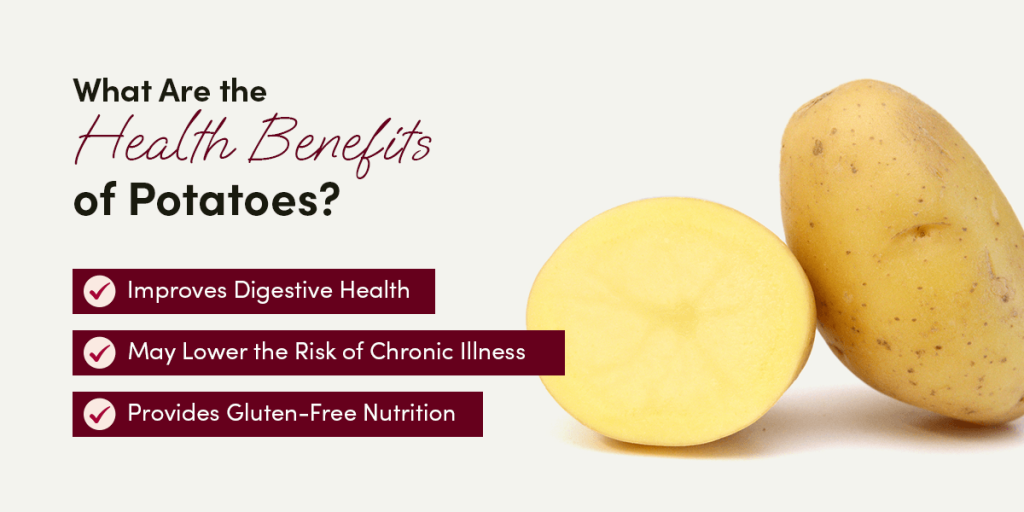
One of the biggest myths about potatoes is that they are unhealthy. However, that’s not in line with science. Here are some of the proven health benefits of potatoes:
The resistant starch in potatoes is a type of fiber that can improve digestive health. It offers the benefits of both soluble and insoluble fiber, which may help it treat some digestive symptoms or act similarly to a a probiotic. A probiotic is a substance that promotes the growth of beneficial gut bacteria.
Most of the resistant starch converts into butyrate, a short-chain fatty acid that may have the potential to reduce colon inflammation and lower the risk of colorectal cancer by improving the colon’s natural defenses.
Potatoes are rich in antioxidants, compounds that fight harmful molecules known as free radicals. A buildup of free radicals in the body can raise the risk of serious health conditions such as diabetes, heart disease and cancer. A diet rich in antioxidants, such as fruits and potatoes with skin, lowers your risk of developing chronic illnesses.
For people with gluten sensitivity or celiac disease, consuming foods that contain the protein could lead to severe negative effects such as stomach pain, constipation, diarrhea and rashes. Potatoes are naturally gluten-free and, therefore, can be excellent addition to your weekly meal plan if you follow a gluten-free diet.
Here are the answers to some of the most frequently asked questions about potato nutritional value:
Yes. Potatoes are an excellent source of vital nutrients and are free of fat, sodium and cholesterol, which can have a negative impact on your health in excessive quantities. They are also very filling and will help you feel satisfied for longer.
Yes. Potatoes are a vegetable rich in complex carbohydrates, such as starch and dietary fiber. People managing their blood sugar levels should be mindful when consuming potatoes, as they are considered a high glycemic index (GI) food.
Both sweet potatoes and white potatoes are vegetables rich in nutrients and can be part of a balanced diet. White and sweet potatoes with skin contain similar nutrients with slight variations in amount. The most significant difference is that sweet potatoes generally have more natural sugars and fiber, while white potatoes have slightly more potassium.
Like most foods, moderation is key. French fries are generally considered unhealthy because they contain high levels of trans fats, calories and sodium. French fries that are prepared through deep frying and salted before serving also elevate the risk of developing certain conditions like high cholesterol or high blood pressure.
If choosing French fries as your side, opt for ones that are baked and lightly salted whenever possible.