


Potatoes may look like simple pantry staples, but they’re actually living tubers that continue to change after harvest. From the moment they’re dug out of the ground, they begin responding to their environment, temperature, light, moisture and airflow, all of which influence how quickly they age, sprout or spoil.
That’s why how long potatoes last can range from a few days to several months, depending on storage and handling. Improper storage can cause potatoes to soften, sprout, turn green or rot far sooner than expected. Ideal conditions help slow these natural processes and preserve quality.
This guide breaks down exactly how to make potatoes last longer under different storage conditions and, more importantly, how to store them properly to maximize freshness. You’ll also learn how to recognize signs of spoilage and why starting with high-quality, U.S. No. 1 grade potatoes gives you a longer-lasting product from day one.
How long you can store potatoes before they spoil depends on where and how you store them. Potatoes kept under the right conditions can last for months, while those stored poorly may go bad in just a few days.
Here’s a quick reference on potato shelf life based on common storage methods:
These time frames assume the potatoes are fresh to start with. Using high-quality potatoes and following proper storage methods greatly influences how long they last.
Proper storage is the most important factor in extending potato shelf life. The variety also matters, as different potatoes age differently depending on skin thickness, moisture content and starch levels. For example:
Here are some guidelines to follow:
Adhering to ideal potato storage conditions delivers surprisingly big benefits for quality. For the best results, store potatoes in an environment that meets the following conditions:
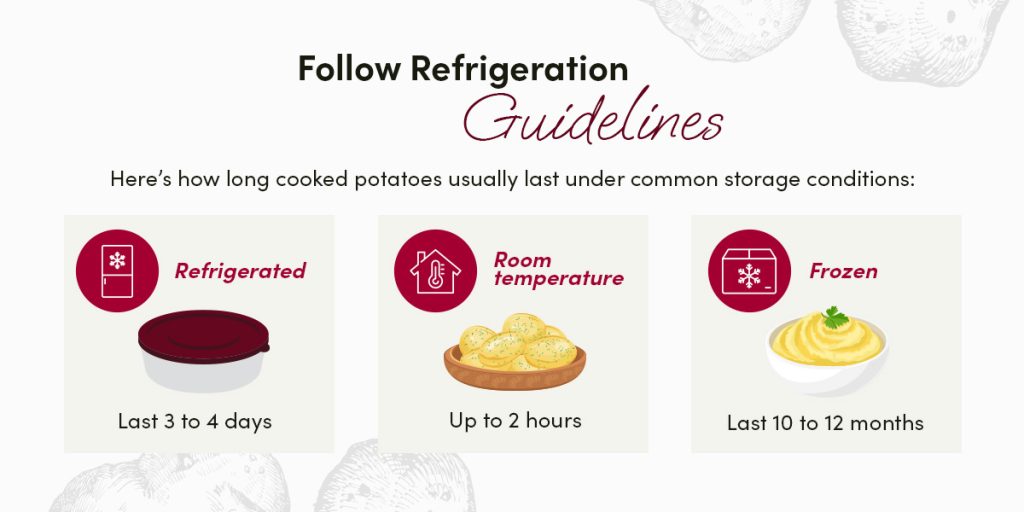
Cooked potatoes spoil much faster than raw ones. Always refrigerate them promptly to lower food safety risks. Once cooked, how and where you store potatoes affects their safety and quality. To keep both quality and safety, refrigerate cooked potatoes as soon as they cool and reheat thoroughly before eating. Here’s how long cooked potatoes usually last under common storage conditions:
Refrigerating raw potatoes can hurt their quality. Cold temperatures cause starches to turn into sugars, and this change can lead to a sweet taste and uneven browning when cooking. These sugars can also cause potatoes to darken more quickly during frying or roasting, affecting both flavor and appearance. Additionally, refrigeration can change the texture, making potatoes less fluffy and denser when cooked. For the best taste and performance, raw potatoes should be stored outside the refrigerator in a cool, dark and well-ventilated area.
Potatoes continue to release moisture after harvest. Airflow is essential for preventing rot and mold, as good ventilation helps moisture escape rather than collect on the surface. Keeping potatoes dry slows spoilage and maintains firmness over time.
Good storage options include:
Avoid sealed plastic bags or airtight containers — they trap moisture and speed up decay. Wait until just before cooking to wash them, so they stay dry and fresh longer.
Potatoes should be stored away from fruits and vegetables that release ethylene gas, which speeds up aging and spoilage. Exposure to ethylene causes potatoes to sprout faster, soften and break down internally, shortening their shelf life. As sprouting increases, compounds like solanine can concentrate near the skin and eyes, leading to bitterness and potential digestive discomfort if consumed in excess.
For best results, keep potatoes separate from common ethylene producers such as onions, apples and bananas. Proper separation helps maintain firmness, flavor and overall potato safety for longer storage.
Even well-stored potatoes won’t last forever. Knowing the difference between harmless changes and true spoilage helps you decide what’s still usable and what should be discarded to keep your kitchen safe. If you notice any of the following signs, the potato should not be eaten:
When potatoes show these symptoms, no amount of trimming can make them safe, and discarding them is the best option.
Some changes are part of a potato’s natural aging process and don’t automatically mean it has gone bad. In many cases, you can eat sprouted potatoes as long as the potatoes are firm and free from strong odors or decay. Simply cut off the sprouts and any surrounding eyes before cooking.
Potato shelf life doesn’t begin in your pantry — it starts in the field. Our high-quality potatoes are grown, cured and packed to minimize damage, keep nutrients and slow spoilage.
Masser potatoes are U.S. No. 1 grade and properly cured after harvest. This process helps heal minor skin damage and reduces moisture loss. Fewer bruises and defects reduce entry points for bacteria, extending freshness and improving storage outcomes across all varieties. When you start with premium potatoes, proper storage is more effective, and your potatoes last longer.
If you want potatoes that stay fresher longer and perform better from the first meal to the last, check out Side Delights to see the difference quality can make.