

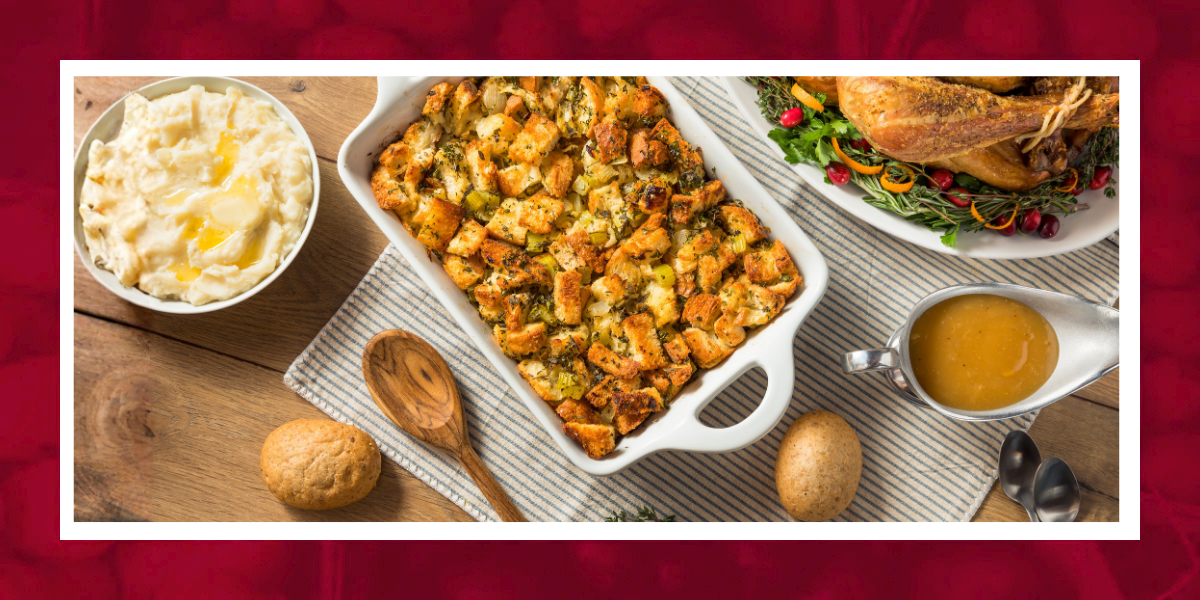
The holiday season brings family gatherings, favorite recipes and plenty of time spent around the table. But between building the menu, shopping for ingredients and coordinating cooking times, preparing Thanksgiving or Christmas dinner can quickly feel overwhelming.
A little planning can make holiday meal preparation much easier, especially when you know how much food to buy before you reach the store. Potatoes are a holiday staple, but their different sizes can make it difficult to know whether one bag will be enough for everyone. How many potatoes per person?
For most holiday meals, plan about 1/2 pound of raw potatoes per adult when potatoes are one of several side dishes. A 5-pound bag will serve about 10 people. Increase the amount to about 3/4 pound per person when potatoes are the main starch, your guests enjoy generous portions or you want leftovers for the next day.
Use this holiday potato serving guide to plan your shopping list, choose the right potato variety and prepare your side dishes with less last-minute guesswork.
One-half pound of raw potatoes per adult is a useful starting point for a side dish. This amount works for mashed, roasted or boiled potatoes served with a main course and several other sides. Iowa State University Extension guidance also indicates that a 5-pound bag makes about 10 to 12 servings of mashed potatoes.
Multiply the number of adult guests by 0.5 pound. If 10 people are coming, begin with 5 pounds of raw potatoes. If 20 people are coming, begin with 10 pounds.
A medium potato and a large potato can differ substantially in weight, so a count such as one potato per person is not equally useful for every variety or bag. Pounds provide a more consistent shopping number.
Use the standard amount when the table includes several side dishes. Move toward 3/4 pound per person when potatoes are the main starch, the guest list includes enthusiastic potato eaters or leftovers are part of the plan.
Use the standard column for a typical holiday meal with several sides. Use the generous column when potatoes will receive more space on the plate or you want enough for another meal.
| Number of guests | Standard side dish | Generous portions or leftovers |
| 4 | 2 lb | 3 lb |
| 6 | 3 lb | 4.5 lb |
| 8 | 4 lb | 6 lb |
| 10 | 5 lb | 7.5 lb |
| 12 | 6 lb | 9 lb |
| 20 | 10 lb | 15 lb |
| 25 | 12.5 lb | 18.75 lb; round to an available pack size |
| 50 | 25 lb | 37.5 lb; confirm pack sizes before ordering |
Quick answer: A 5-pound bag is a practical amount for about 10 standard side-dish servings.
The 1/2-pound rule is a useful default, but the best amount can shift slightly with the dish. These ranges are purchasing estimates based on raw potato weight.
| Potato dish | Amount per adult | Planning note |
| Mashed potatoes | 1/2 lb | Use the higher amount when mash is the main holiday side. |
| Roasted potatoes | 1/2 lb | Round up when roasted potatoes are the only starch. |
| Baked potatoes | 1 medium-to-large potato | Buy a few extras for a large group because potato sizes vary. |
| Potato salad | 1/3 to 1/2 lb | Use the lower end when several other sides are available. |
| Scalloped or au gratin potatoes | 1/3 to 1/2 lb | Rich ingredients generally support a slightly smaller portion. |
Serving tip: Choose one estimate and use it consistently across the entire guest list. Mixing potato counts and weight-based estimates can lead to an inaccurate total.
The chart gives you a reliable starting point. Before you shop, consider how your guests will be served and what else will be on the table.
A meal with stuffing, rolls, macaroni and cheese and several vegetables usually needs less potato per person than a meal built around a roast, potatoes and one vegetable.
Plated meals create more consistent portions. Buffets may require a small cushion because guests choose their own serving size and may return for seconds.
Young children often take smaller servings than adults, but appetite varies. Use the adult estimate for teenagers and adjust younger children according to the rest of the menu.
If leftovers are part of the plan, add about 10 to 20 percent to the standard amount or use the generous column. This creates a clear shopping target without doubling the batch.
The quantity formula stays the same across varieties, but the potato you choose affects the finished texture and the way you shop.
Choose russet potatoes for light, fluffy mashed potatoes or baked potatoes with a soft interior. Because individual russets can be large, use weight rather than count for mashed potatoes.
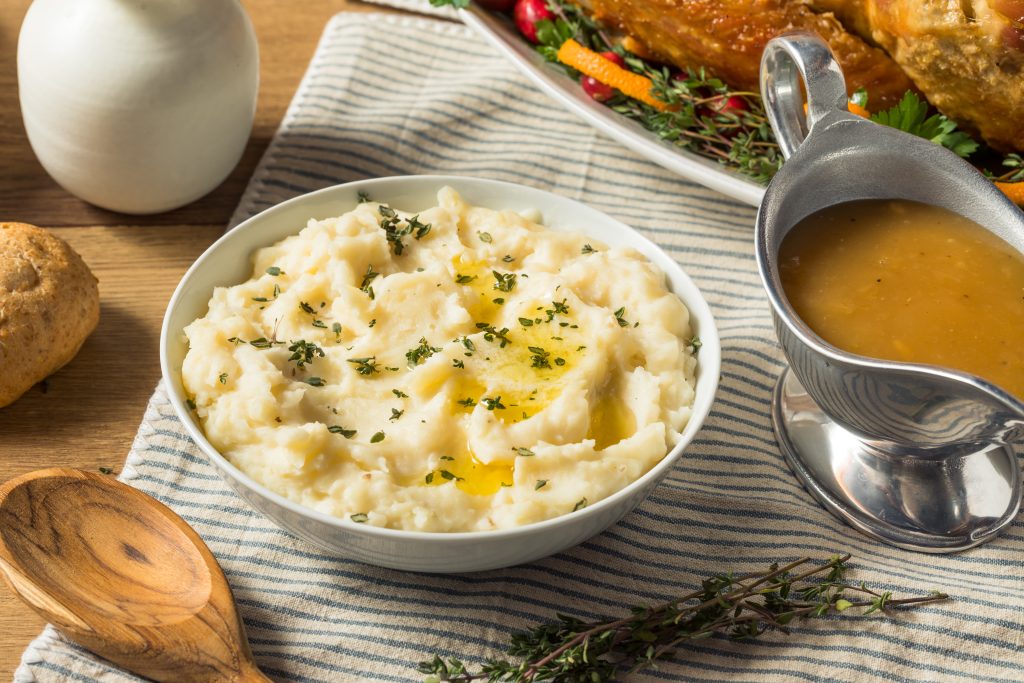
Choose yellow potatoes for a naturally creamy texture and buttery flavor. A blend of russets and yellows balances fluffy and creamy textures in a holiday mash.
Red and petite potatoes hold their shape well when roasted. Their individual count varies by size, so weigh the full amount instead of relying on a fixed number of small potatoes per guest.
Once the guest count and dish are set, turn the serving estimate into a practical purchase amount.
Count the people you expect to serve and note whether the group includes children, teenagers or guests with especially large or small appetites.
Multiply the guest count by 0.5 pound for standard side-dish portions or by 0.75 pound for generous portions and leftovers.
Potatoes are commonly sold in set bag and case weights. Round the calculated total to an amount you can actually purchase. For example, a 6-pound calculation may mean buying a 5-pound bag plus several loose potatoes or choosing the next available bag size.
Keep raw potatoes in a cool, dark, well-ventilated place until you are ready to cook. See Masser’s guide to how long potatoes last for more storage information.
For community dinners, catered events, schools and foodservice programs, calculate the total weight first and then confirm production capacity. At the standard estimate, 25 pounds provides about 50 side-dish portions.
Large batches should be divided according to the capacity of each pot, pan or mixer. Use one variety and a consistent size range, weigh each batch and record the finished yield. A tested yield helps buyers and kitchen teams order more accurately for future events.
Buyer planning note: Confirm pack sizes, expected trim loss, service style and the desired finished portion before placing a high-volume order. Masser offers multiple fresh potato varieties and packaging options for consumer, retail and foodservice needs.
A small amount of extra potato provides flexibility, but it helps to decide how it will be used. Uncooked potatoes can remain available for another meal when stored properly. Cooked leftovers can become potato cakes, a shepherd’s pie topping, breakfast potatoes or soup.
Refrigerate cooked potatoes within two hours and use refrigerated leftovers within three to four days. Reheat leftovers to 165°F. Planning a specific use for the extra amount can reduce waste while still leaving enough for seconds.
Plan 1/2 pound of raw potatoes per adult for a standard side dish. Use 3/4 pound for generous portions or leftovers. Multiply that amount by the guest count, then round to a bag or case size you can purchase.
Ready to cook? Use Masser’s classic creamy mashed potatoes recipe, explore our potato varieties or find Masser potatoes near you.
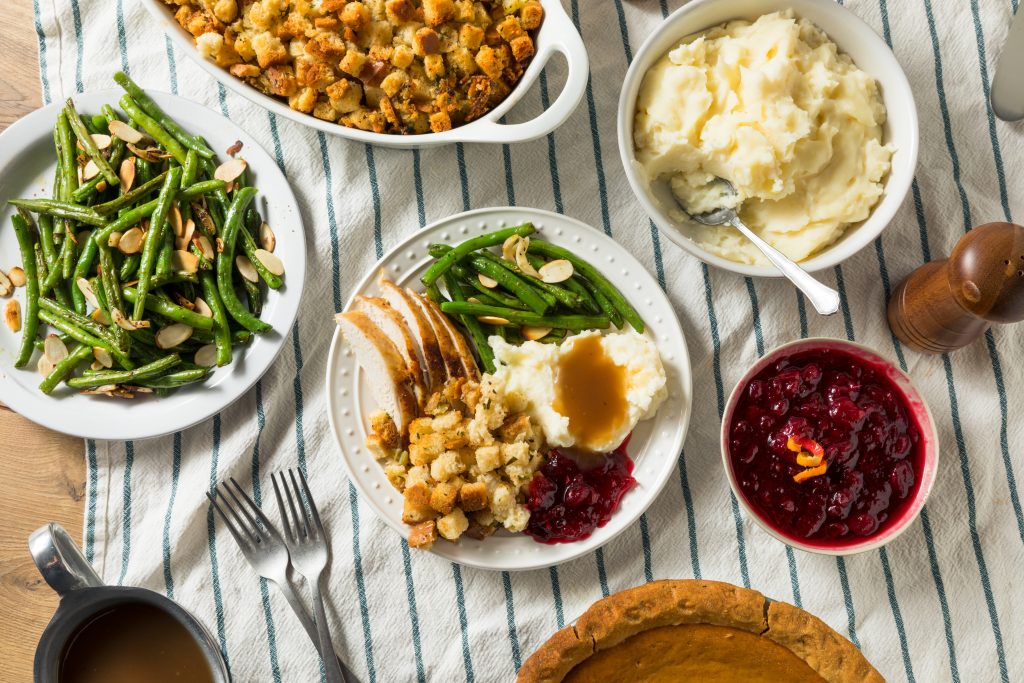
Plan about 1/2 pound of raw potatoes per adult when potatoes are one of several side dishes. Increase to about 3/4 pound per person for hearty portions or planned leftovers.
Start with 5 pounds of raw potatoes for 10 people. Buy 7 to 8 pounds when potatoes are the main starch, guests are hearty eaters or you want generous leftovers.
Yes, a 5-pound bag is a sound starting point for 10 side-dish portions. Iowa State University Extension guidance says a 5-pound bag makes about 10 to 12 servings of mashed potatoes.
Russet potatoes are best for light, fluffy mashed potatoes. Yellow potatoes make a denser, creamier mash with a naturally buttery flavor. A blend delivers a balance of both textures.
Yes. Cool and refrigerate them within two hours in shallow containers. Reheat them to 165°F in the oven, on the stovetop or in the microwave, then hold at 140°F or above until serving.
Use a covered slow cooker on warm, a low oven or a warming tray that keeps the potatoes at 140°F or above. Check the temperature with a food thermometer and stir occasionally.